
CS2 Finish Styles Explained
Updated
A finish style in Counter-Strike 2 is the real-world painting or metalworking technique the game simulates when applying a skin to a weapon. Instead of treating every finish like a flat sticker, CS2 builds each skin around specific material rules that control how colors sit on the gun, how the surface reacts to light, and how it looks at rougher wear tiers. Finish style is separate from rarity, and it never changes a gun's damage, recoil, or accuracy.
Four pieces decide how any skin looks in your hands: the paint kit names the finish itself, the finish style sets the material and wear rules, the pattern seed controls any allowed texture shifting or rotation, and the float value sets how worn that copy is. Valve's Weapon Finishes Guide documents nine established finish styles, and CS2 also includes a newer option called Custom Paint Job Extended.
Finish Styles at a Glance
Here is a quick overview of the nine classic finish styles and how they look and wear in-game.
| Style | What it looks like | Example skin | Wear |
|---|---|---|---|
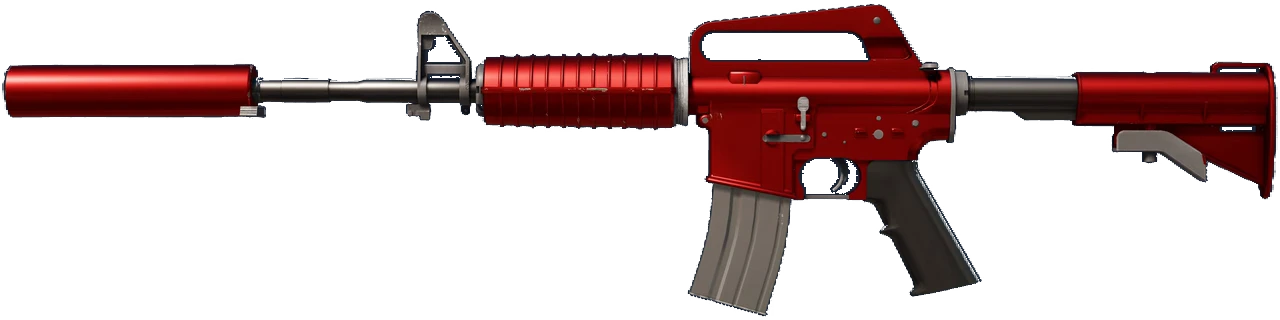
| Solid Color | Flat blocks of up to four colors painted onto separate weapon parts | Glock-18 | Candy Apple | Paint chips away to reveal the material underneath |
| Spray-Paint | Layered stencil patterns sprayed across the assembled weapon | AK-47 | Safari Mesh | Wears down layer by layer before showing the material underneath |
| Hydrographic | Printed patterns wrapped onto panels, paired with solid accents | Desert Eagle | Crimson Web | Paint chips away to reveal the material underneath |
| Anodized | One glossy metallic candy coat over shiny chrome | AUG | Hot Rod | Wears to the chrome base coat first, then to the material underneath |
| Anodized Multicolored | Patterned or layered metallics with varied shine | M4A1-S | Blue Phosphor | Paint chips away to reveal the material underneath |
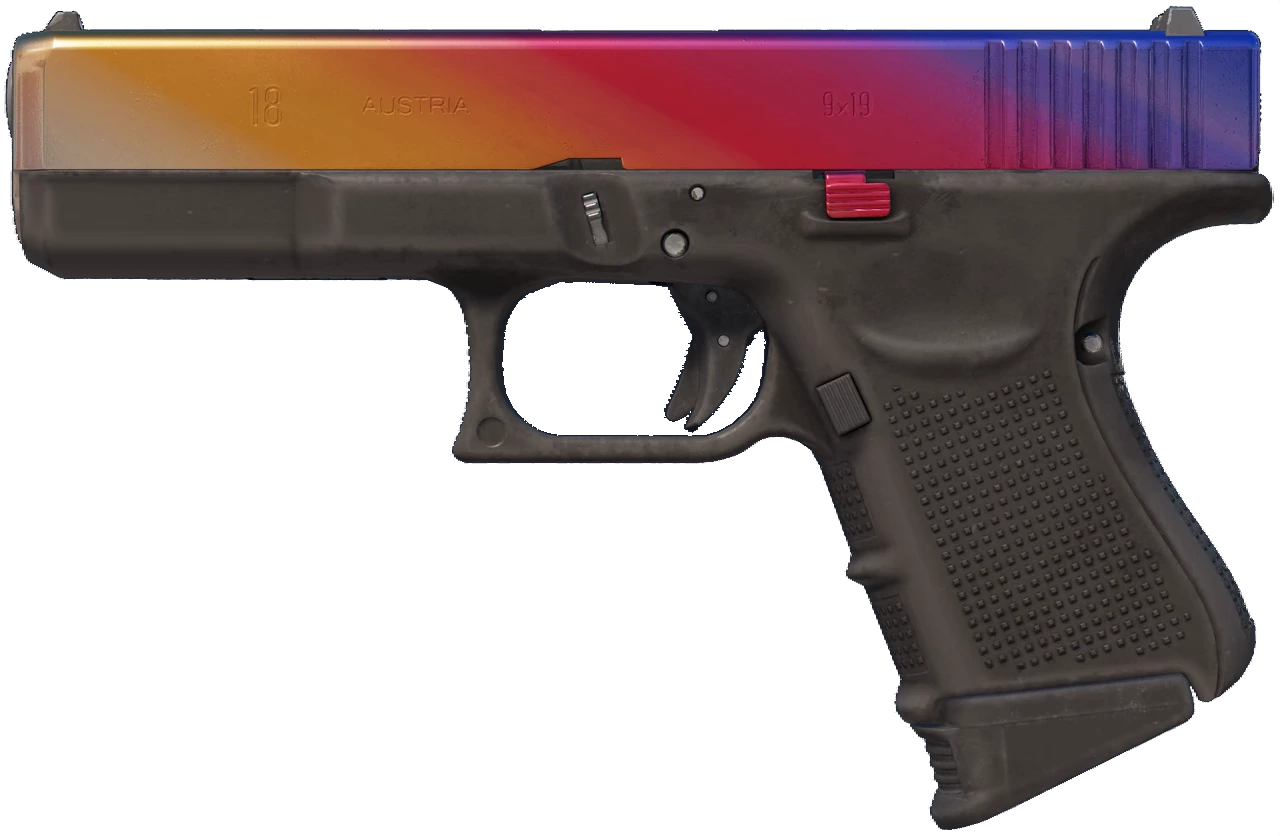
| Anodized Airbrushed | Smooth airbrushed fades or flames over a chrome base | Glock-18 | Fade | Wears to the chrome base coat first, then to the material underneath |
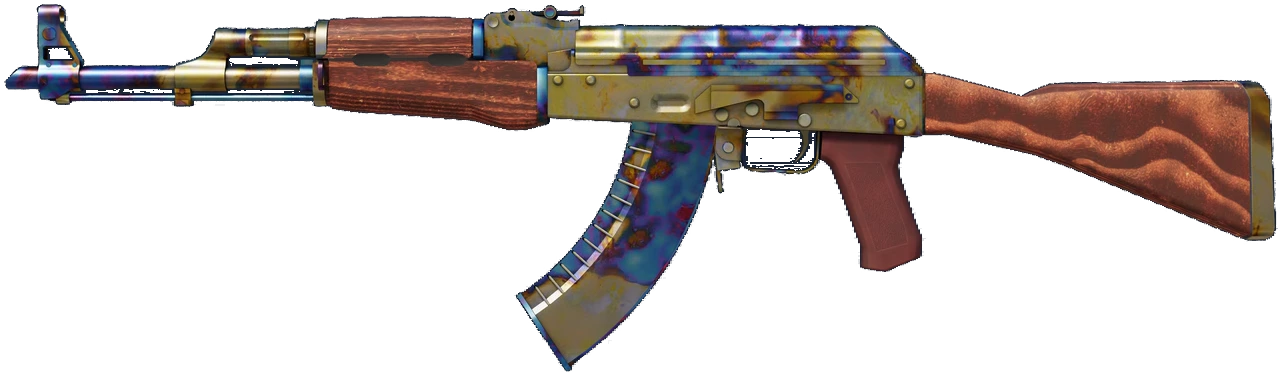
| Patina | Chemically aged or engraved metal with organic tones | AK-47 | Case Hardened | Ages with tint and grime in crevices; scratches reveal base metal |
| Custom Paint Job | Full-color illustrations and artwork aligned to weapon panels | AK-47 | Nightwish | Paint chips away to reveal the material underneath |
| Gunsmith | Mixes custom-painted panels with chemically aged metal parts | AWP | Gungnir | Painted parts chip to bare material; metal parts age and scratch to base metal |
Alongside these nine established styles, CS2 also includes the newer Custom Paint Job Extended style for layered designs, covered further down.
Custom Paint Job
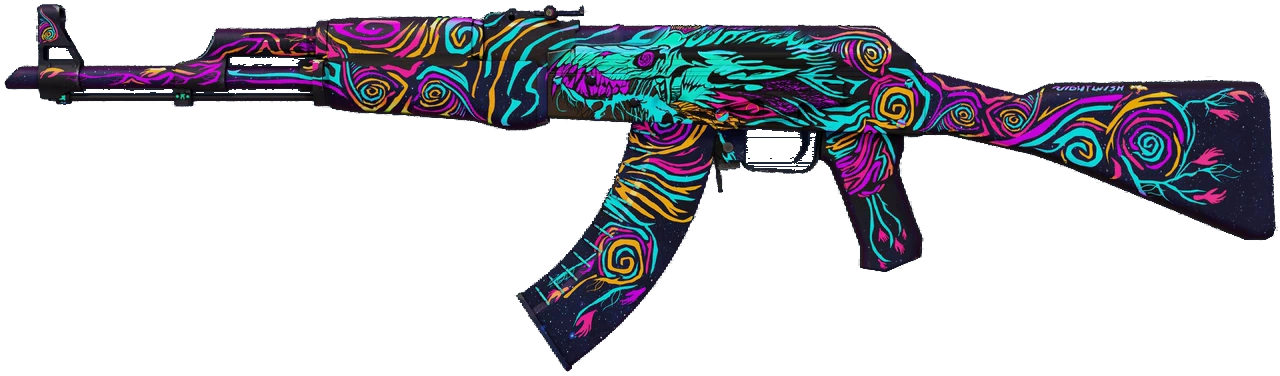
Custom Paint Job is the style behind most of CS2's detailed, full-color artwork. Whenever a skin wraps characters, lettering, or clean graphic panels across a rifle or pistol, you are usually looking at a Custom Paint Job. Artists get a full color palette and can also add subtle surface depth so fine lines stand out in-game.
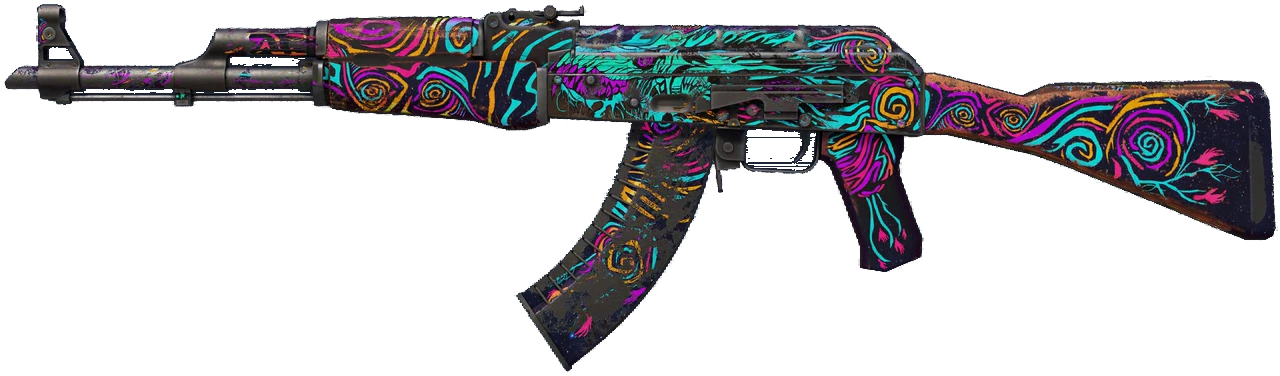
You can see two very different takes on it with the AK-47 | Nightwish, which pairs neon deer and dreamcatcher artwork with a pearlescent finish, and the AK-47 | Asiimov, which lays crisp white, orange, and black sci-fi panels across the body. Many Custom Paint Jobs line up the same way on every copy, though randomization still depends on each finish's settings rather than a fixed rule for the whole style. At higher floats, paint chips away directly to show the unfinished material underneath, though creators can protect important parts of the artwork so central details hold up better.
Solid Color
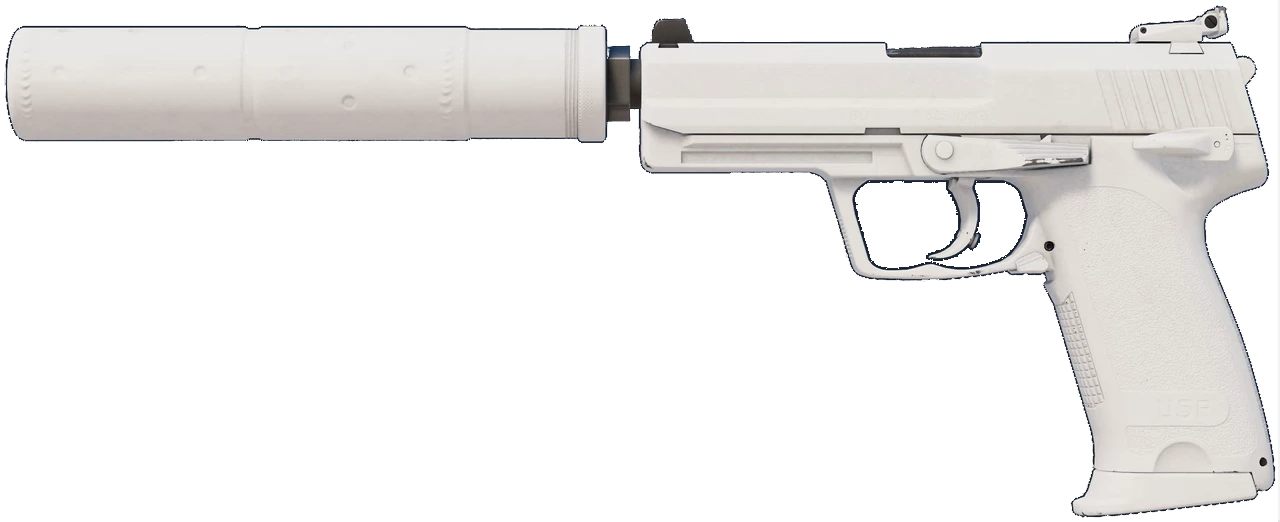
Solid Color is the cleanest, most stripped-back style in CS2. You see flat blocks of up to four colors painted onto individual weapon parts, with no patterns or illustrations layered over the top. That gives these skins a crisp, factory-painted look where simple color blocking does all the work.
The USP-S | Whiteout coats the pistol and suppressor in flat white, while the Glock-18 | Candy Apple splits individual components into red and black. Because there is no busy artwork to disguise blemishes, scratches show up quickly on Solid Color skins, chipping directly down to the bare material underneath.
Spray-Paint
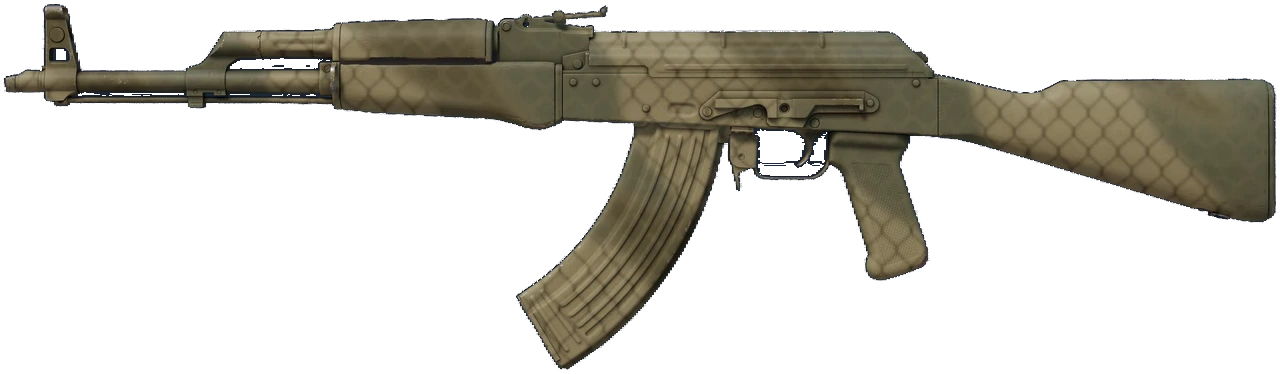
Spray-Paint skins look like someone placed stencils or netting over an assembled weapon and sprayed multiple coats across it. The edges look softer than printed graphics, and patterns flow continuously across curves and seams, which fits classic tactical camos and rugged finishes.
The AK-47 | Safari Mesh uses mesh fencing and cardboard cutouts for its muted tan camo, while the Galil AR | Crimson Tsunami sprays a blue wave stencil over a maroon base. Spray-Paint wear happens in layers: each coat wears away to show the paint coat beneath it first, and only heavier wear breaks through to the bare material underneath.
Hydrographic
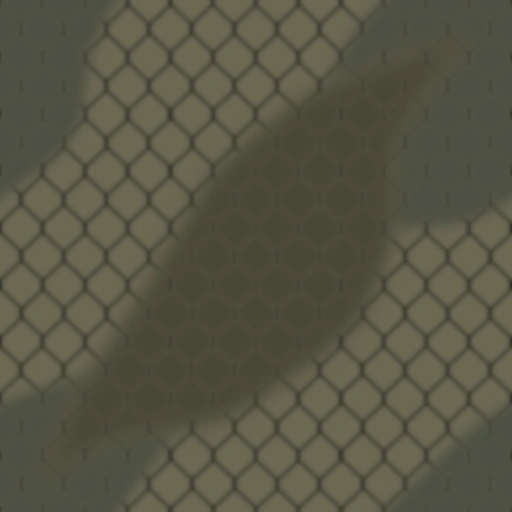
Hydrographic reproduces real-world hydro-dipping, where disassembled, primed gun parts are lowered through a floating printed film on water. In-game, you see sharp repeating patterns wrapped over the main painted panels alongside solid accent colors on smaller parts, often finished with a subtle semi-gloss sheen.
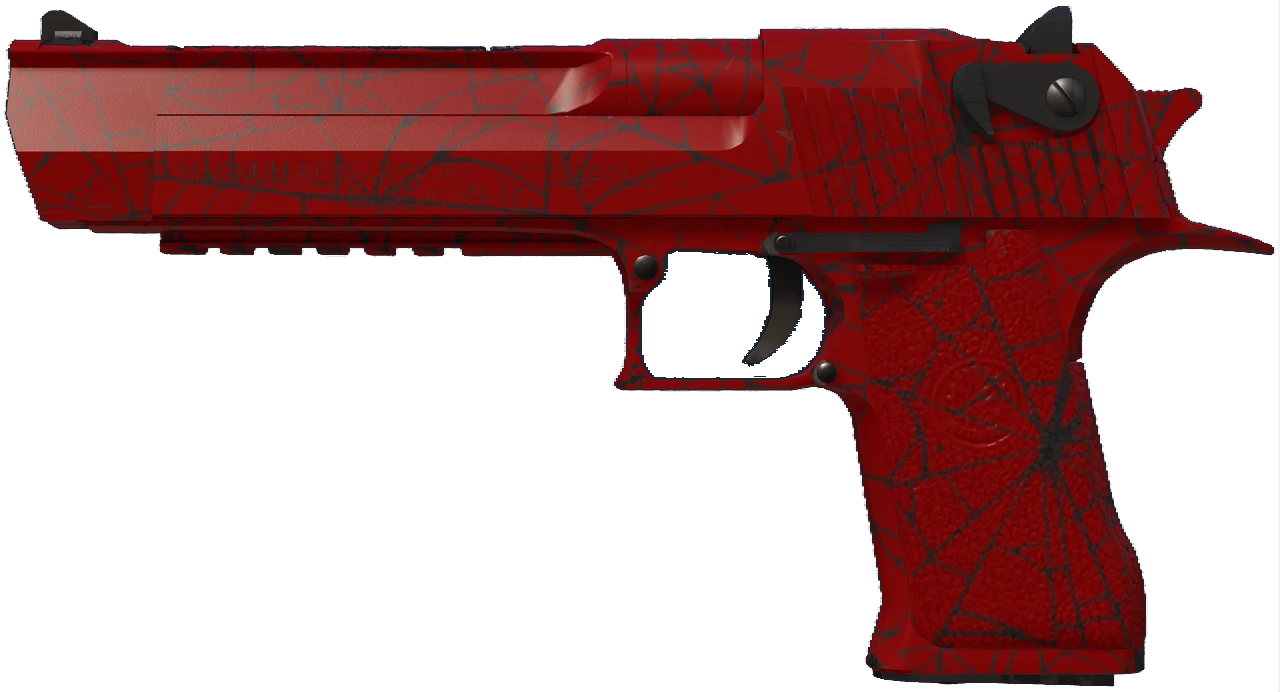
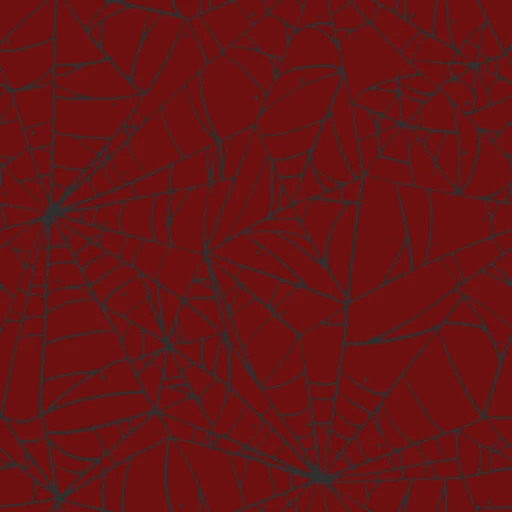
That clean transfer stands out on the Desert Eagle | Crimson Web, which lays dark spider webs over a deep red coat, and on the M4A1-S | Bright Water, which wraps blue camo neatly across the rifle. At higher floats, Hydrographic skins wear directly down to the unfinished material underneath, though artists can reinforce chosen areas so key parts resist scratching longer.
Anodized
Anodized is CS2's classic single-color metallic finish. Because many real firearm alloys cannot be anodized directly, Valve mimics the effect by laying one transparent colored candy coat over a shiny chrome base. In-game, the painted regions look glossy and reflective while smaller mechanical parts stay untouched.
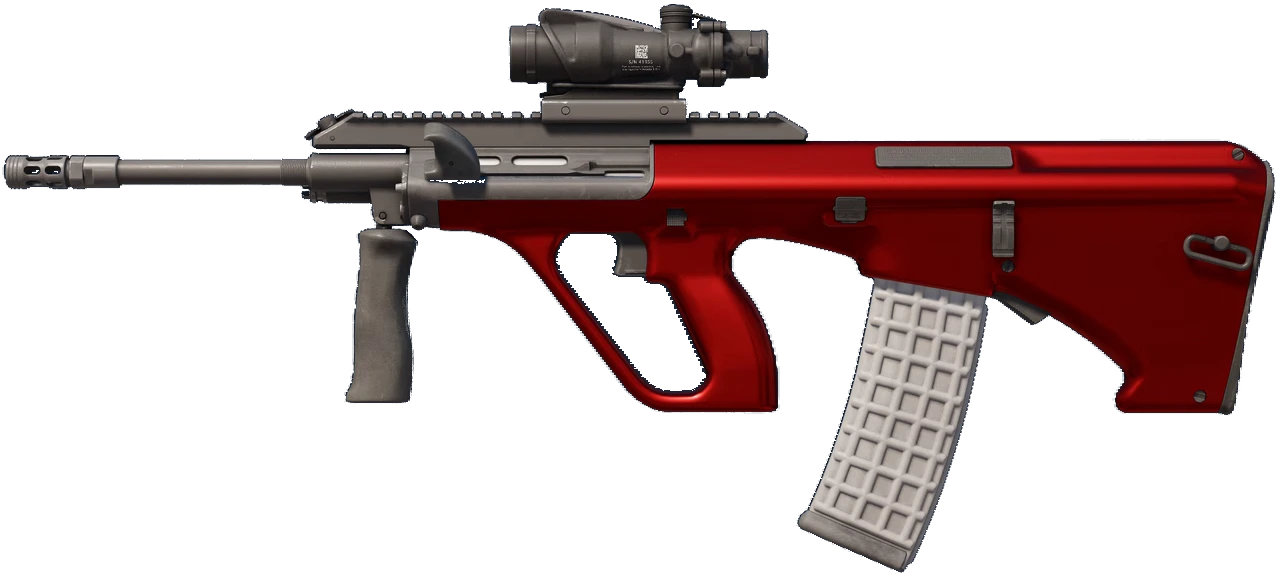
The AUG | Hot Rod lays a transparent red candy coat over chrome, while the MAC-10 | Silver uses a bright silver candy coat for a clean metallic shine. Wear on an Anodized skin shows up in two distinct steps: scratches cut through the colored coat to expose the shiny chrome base first, and only heavier wear reveals the bare material underneath.
Anodized Multicolored
Anodized Multicolored takes that glossy metallic feel and opens it up to multi-colored patterns and varied surface shine. Instead of one uniform candy coat, a single skin can mix bright, mirror-like sections with flatter painted panels on the same weapon.
The M4A1-S | Blue Phosphor shows this off by stacking metallic blues over a chrome blue base so reflections ripple across the receiver as you move. This style is also a good reminder that sharing a skin name does not guarantee the same finish style: while the AUG | Hot Rod is standard Anodized, the M4A1-S | Hot Rod is classified as Anodized Multicolored. That changes wear too, because Valve's finish rules have Anodized Multicolored wear directly down to the underlying material instead of exposing a chrome layer first.
Anodized Airbrushed
Anodized Airbrushed is behind CS2's smooth metallic fades and airbrushed flames. It mimics freehand airbrushing with transparent candy paints over a chrome base, letting colors blend smoothly along the weapon's body instead of stopping at part seams, with solid accents on smaller pieces.
Two classic pistols use this style: the Glock-18 | Fade blends transparent colors smoothly across the slide, while the Desert Eagle | Blaze lays bright flames along the front of the barrel over a dark metallic base. Like regular Anodized finishes, wear chips through the colored coat to reveal the chrome base first before heavier wear reaches the bare material underneath.
Patina
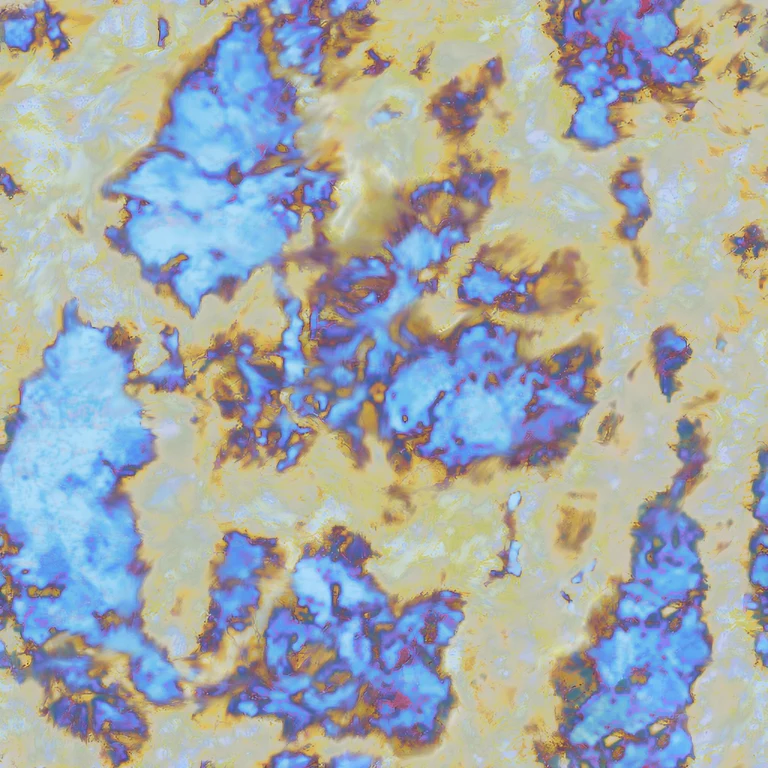
Patina simulates a chemical reaction that forms a hardened shell over metal, similar to heat case hardening, cold bluing, or acid aging. In-game, Patina skins look distinctly metallic and organic, often showing shifting heat-treated colors or recessed engravings that feel carved straight into the steel.
The AK-47 | Case Hardened captures wood-charcoal heat hardening with swirling blues, golds, and purples, while the AK-47 | Cartel pairs dark aged metal with engraved skeletons, flowers, and serpents. Players sometimes say Patina skins only darken and never scratch, which is not quite accurate. Higher floats do shift the finish toward an aged tint and collect grime in crevices, yet Valve's Patina model also reveals the underlying base metal through scratches.
Gunsmith
Gunsmith combines Patina and Custom Paint Job on one weapon. Valve's preset weapon zones assign Patina to the metal fittings and Custom Paint artwork to the main body panels, letting creators mix aged metallic accents with bright full-color designs and sculpted surface details.
You can see that pairing on the AWP | Gungnir, where pearlescent blue and ivory artwork of Odin's spear meets metallic fittings, and on the AK-47 | Bloodsport, which combines crisp white logo decals with a red and black body. Because two different systems share one gun, Gunsmith skins do not simply darken evenly at higher floats. Patinated metal regions age, collect grime, and scratch to base metal, while custom-painted sections chip directly toward the underlying material.

Custom Paint Job Extended
Beyond the nine classic styles in Valve's Workshop guide, CS2 includes a newer finish style called Custom Paint Job Extended. In the July 9, 2026 Counter-Strike 2 update, Valve updated Custom Paint Job Extended with a dedicated overlay mask texture and independent overlay UV randomization separate from albedo UV randomization.
In plain terms, albedo is the skin's main base artwork, and UV coordinates tell the game how a flat texture wraps around the 3D weapon model. Separating those two layers lets a finish keep its base artwork aligned (or randomized on its own) while a second overlay design shifts independently across only the masked regions of the gun. Standard full-art skins like the AK-47 | Nightwish and AK-47 | Asiimov remain regular Custom Paint Job finishes rather than Extended ones.
How Textures and Pattern Seeds Work
CS2 wraps patterned finishes onto weapons in two main ways. Hydrographic, Anodized Multicolored, Patina, and Custom Paint Job map their texture onto the weapon's UV layout, which works like disassembling the gun into flat panels before painting them. Spray-Paint and Anodized Airbrushed use triplanar mapping instead, projecting paint onto the sides, top, bottom, front, and back of the assembled weapon so stencils and gradients blend smoothly across corners.
Several styles also store extra instructions in the texture's alpha channel, a hidden fourth layer alongside red, green, and blue. On Hydrographic, Custom Paint Job, and the painted sections of Gunsmith, that channel can leave parts unpainted or protect key artwork from wearing down quickly. On Anodized Multicolored and the patinated areas of Gunsmith, it can also control paint roughness so certain regions look glossier than others.
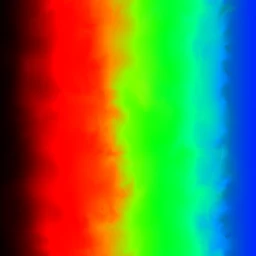
If you look at extracted texture sheets, what you see depends on both the style and how the preview was exported. Four-color styles (Spray-Paint, Hydrographic, Anodized Multicolored, and Anodized Airbrushed) can store raw game pattern sheets as RGB channel masks, where bright red, green, and blue simply mark where three paint layers sit over a base coat rather than showing final colors. That is why a sheet like Fade visibly shows a rainbow RGB gradient, while extracted previews for skins like Safari Mesh and Crimson Web are often already recolored to match their in-game look. Patina sheets like Case Hardened already hold full-color artwork on the sheet itself.
When a skin is created, its pattern seed selects a random offset and rotation within whatever range that paint kit allows, and the game automatically adjusts pattern scale for each weapon size unless scaling is disabled to lock artwork directly onto the model. Because every weapon has its own shape and UV layout, the same seed number maps differently on different guns and will not recreate the same visible layout across weapons.
How Finish Styles Affect Wear
A skin's float value is locked once when the item is created, whether it comes from a case, a drop, or a trade-up contract. Playing matches never adds scratches, fades the paint, or pushes a skin into a worse wear tier. Even two copies with identical float values look slightly different up close, because CS2 randomizes the placement of both the scratch texture and the grime layer on every skin.
Beyond each style's basic wear path, durability masks can make a big difference in how a skin holds up at higher floats. Comparing a Factory New and Battle-Scarred AK-47 | Nightwish shows this clearly: heavy wear strips paint back along exposed edges and surfaces, while protected areas of the neon artwork remain much easier to read.
Lighting and surface relief sit right on top of wear. Patina, Custom Paint Job, and Gunsmith support normal maps, which use light and shadow to create the appearance of wood grain, engraved lines, or raised bumps without adding extra 3D polygons. CS2's Physically Based Rendering (PBR) then calculates how each surface's reflectance and roughness react to the surrounding map, changing how highlights and metallic sheen look in different lighting without ever changing the skin's seed or float.
Common Questions
Does a shiny metallic look always mean a skin is Anodized?
No. Anodized finishes use a chrome base coat, so they are naturally reflective, but they are not the only skins that shine. Patina finishes, metallic Gunsmith parts, and pearlescent Custom Paint Jobs like the AK-47 | Nightwish can all catch light strongly under CS2's PBR lighting.
Does finish style determine whether a skin gets pattern premiums?
Not on its own. Finish style only controls how a texture wraps and whether it can shift with the pattern seed. Plenty of skins in pattern-based styles trade with little attention paid to seed, while standouts like the AK-47 | Case Hardened or Glock-18 | Fade matter because players care about where specific colors land on the gun.
How can I find a skin's finish style?
You can check it directly in the Summary section on any skin's item page on our site. That is the quickest way to verify the exact style, especially when two skins share a name but use different finish styles.